
Bedford has 3.35 years of housing land against a five-year duty, and its Local Plan was withdrawn as unsound. What that means if a developer applies near you.
Bedford borough is in an unusual planning position, and it is worth understanding before the next application lands near you. The council withdrew its Local Plan 2040 after the government’s inspector found it unsound. It has 3.35 years of deliverable housing land against a legal duty to show five. And a Government order has granted planning permission for a theme park resort at Kempston Hardwick that the withdrawn plan could not accommodate.
Those three facts are connected, and together they explain most of what is going to happen to development in this borough over the next five years.
The Local Plan 2040 was withdrawn, and why that matters
Bedford Borough Council withdrew the Local Plan 2040 from examination at a full council meeting on 8 October 2025. The council’s own account of it is blunt: the government deemed the plan unsound, primarily because of fundamental concerns over infrastructure funding to support the growth levels proposed and the impacts of the proposed Universal theme park.
That leaves the borough governed by a development plan made up of the Local Plan 2030, adopted in 2020, the Allocations and Designations Development Plan of 2013 and parts of the Local Plan 2002, plus made neighbourhood plans and the minerals and waste plan.
The practical effect is that the strategic policies steering where housing goes in Bedford are now more than five years old. That is not a technicality. It changes which yardstick the council has to measure its land supply against, and it is why the next number matters so much.
3.35 years of housing land
Because the adopted strategic policies are more than five years old, the council must assess its supply against local housing need calculated by the government’s standard method, not against its own adopted target.
That standard-method figure is 1,235 dwellings a year. Over five years that is 6,175, and with the 5% buffer the National Planning Policy Framework requires, the council needs to demonstrate 6,484 deliverable homes.
It can demonstrate 4,351.
| Measure | Homes |
|---|---|
| Annual requirement (standard method) | 1,235 |
| Base requirement over five years | 6,175 |
| Five-year requirement plus 5% buffer | 6,484 |
| Revised annual requirement | 1,297 |
| Deliverable supply over five years | 4,351 |
| Years of supply | 3.35 |
The projected completions behind that 4,351 are 799 in 2025/26, 888 in 2026/27, 1,004 in 2027/28, 994 in 2028/29 and 666 in 2029/30. The council has not applied a 20% buffer because its most recent Housing Delivery Test result, published in December 2024, showed the borough delivering 145% of its housing requirement. That is worth holding on to: Bedford has been building. It is the pipeline for the next five years that is short, not the recent record.
What it means for you
If you live somewhere a developer might fancy, this is the part that matters.
When a council cannot demonstrate five years of deliverable housing land, national policy tips the balance in favour of granting permission for sustainable development unless the harm clearly outweighs the benefit. In practice that means applications on sites the council never allocated are harder to refuse, and refusals are more likely to be overturned on appeal. Bedford is at 3.35 years, which is a long way short rather than a near miss.
If you are objecting to something near you, the argument that a site is not in the Local Plan carries much less weight in Bedford right now than it would in a borough with an up-to-date plan. Site-specific arguments about access, flood risk, heritage and drainage do not lose any weight at all, and given that this borough is built along the Great Ouse, flood risk is usually the strongest ground available.
The Local Plan 2050 has started, and the timetable is long
Preparation of the Bedford Borough Local Plan 2050 formally commenced, with notice published on 17 April 2026. It will cover the whole borough and set the framework for development to 2050.
The stages the council has published:
- June or July to October 2026: the call for sites exercise, gathering land and development opportunities from landowners, developers, businesses, community groups, parish councils and residents. Anyone can submit a site if they own it or have the owner’s permission.
- September 2026: the first consultation, on the scope of the new plan. It will run six weeks and close in October.
- On or before 30 April 2027: the gateway 1 assessment, confirming whether the work done so far is enough to move into the formal stages of the new planning system.
- After that: a 30-month plan preparation period.
Add that up and an adopted Local Plan 2050 is several years away. In the meantime, the 3.35-year land supply position stands, and the borough keeps determining applications against policies written for a different decade.
Separately, the council has adopted four new supplementary planning documents covering design codes, development briefs and guidance including tall buildings. They are interim versions while formatting is finished, but they are adopted and they carry weight in decisions now.
Universal at Kempston Hardwick: permitted by order, not by the council
The single largest development in Bedford’s history was not granted by the borough council at all. It was granted by Parliament.
The Town and Country Planning (Entertainment Resort Complex, Bedford) Special Development (No. 2) Order 2025 was made on 15 December 2025, laid before Parliament on 16 December 2025, and came into force on 12 January 2026. It replaced an earlier order, SI 2025/1315, which has been revoked.
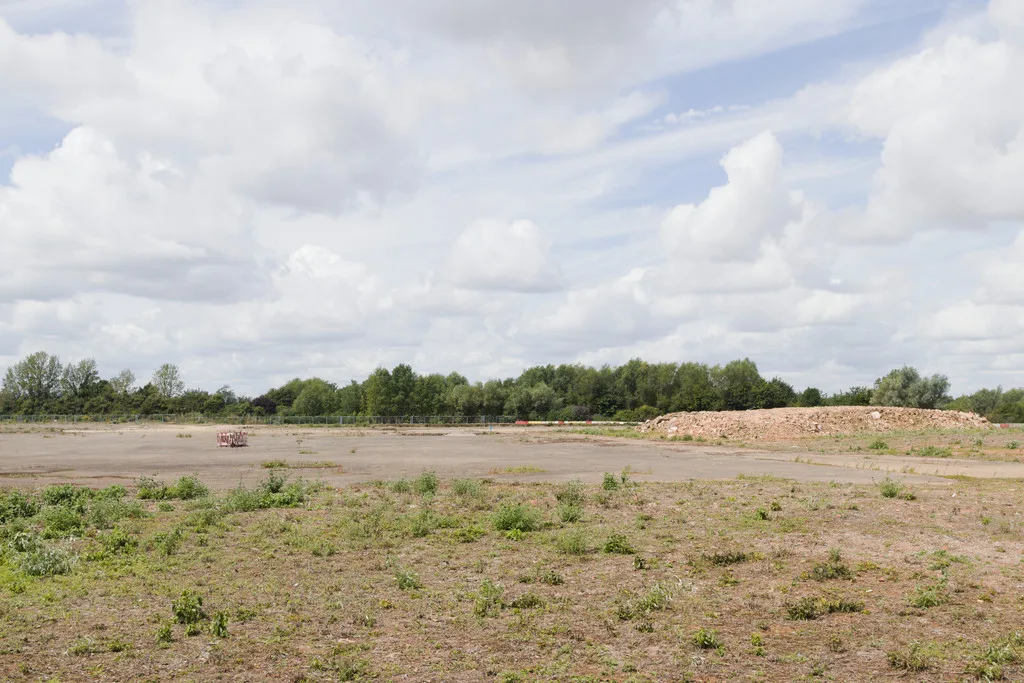
The order grants planning permission for an entertainment resort complex on the land at and adjoining the former brickworks at Kempston Hardwick. What it permits, in the order’s own terms, includes theme park attractions, rollercoasters and water features, hotels, camp sites, restaurants, bars and retail, offices, warehousing and maintenance buildings, staff accommodation, solar and energy infrastructure, drainage and water works, footpaths and cycleways, roads, parking and service stations, perimeter security and landscaping.
It also includes railways. The order permits a Wixams station with four platforms and improvements to Kempston Hardwick station. That is directly relevant to anyone following the stalled Wixams station scheme, which the council says is being reassessed against a proposed larger station.
The order sets minimum habitat creation on the site: 20.5 hectares of standing water, 16.1 hectares of woodland, 3.6 hectares of reedbed, 3.4 hectares of meadow grassland, 3.2 hectares of scrub, 2.5 hectares of open mosaic habitat, 4.2 kilometres of watercourse and 2.4 kilometres of hedgerow. It does not set a cap on visitor numbers, hotel rooms or floorspace.
East West Rail: consent application expected January 2027
The other project reshaping the borough is East West Rail, which is going through a Development Consent Order rather than the ordinary planning system, so the final decision rests with the Secretary of State and not with Bedford.
Within the borough, the current proposals include upgrading the Bedford to Bletchley line, new rail infrastructure through the borough, expanding the railway corridor in parts of the town to as many as six tracks, changes to Bedford station, highway alterations, bridge works, a new viaduct north of the town, a proposed multi-storey car park in Queens Park, and compulsory purchase and potential demolition of properties inside the safeguarding area.
The council’s formal position, taken at Full Council after East West Rail published its “You Said, We Did” report on 19 November 2025, is that it opposes the demolition of properties in the Poets and Ashburnham Road areas, is concerned about the expansion from four tracks to six, and objects to changes to the safeguarding boundary that pulled additional properties in.
East West Rail held its final non-statutory consultation from 14 April to 9 June 2026. It expects to submit its DCO application in January 2027. Residents and businesses are not statutory consultees in that process, which is why responding to the consultations while they are open is the practical route in. The council’s full response to the 2026 consultation is published on its East West Rail page.
The larger sites already permitted
Away from the headline projects, the borough’s five-year supply rests on a familiar set of large sites, all with planning permission:
- Land north of Bromham Road, Biddenham, 1,300 homes permitted, 811 already completed and 489 outstanding.
- Wixams Village 3, 564 permitted, 424 outstanding, the largest single remaining tranche.
- Land to the rear of the sheds, Shortstown, 592 permitted with 238 outstanding.
- Land at the former DVSA site, Shortstown, 204 homes, none yet built, subject to a section 106 agreement.
- Wixams Village 2 and Village 4, together 1,215 permitted with 188 outstanding.
- Land at Graze Hill, Ravensden, 163 permitted with 75 outstanding.
If you want to know what is coming to your own street rather than the borough, that is a different search, and the council’s own portal is the place to do it.
How to follow the planning record yourself
- Applications near you. Bedford Borough’s Public Access planning register publishes every application, with documents, plans, consultee responses and the decision. The weekly list of newly validated applications goes back years.
- The plan itself. The planning policy and place making section carries the adopted plan, the Local Plan 2050 timetable and the call for sites.
- The evidence. The council’s monitoring and delivery page publishes the five-year supply statement, the annual housing and employment monitoring reports and the brownfield land register.
- Committee papers. Planning committee agendas, reports and minutes are published through the council’s democratic services site.
What gets built changes what homes are worth, which is why our Bedford house prices page reads the sold-price record alongside this one, and both railway schemes are covered from the passenger’s side in our trains to London page.
Sources
- Bedford Borough Local Plan, Bedford Borough Council, including the account of the Local Plan 2040 withdrawal on 8 October 2025
- Bedford Borough Five Year Supply of Deliverable Housing Sites 2025/26 to 2029/30 (PDF)
- Notice of commencement of the Bedford Borough Local Plan 2050, published 17 April 2026
- Planning policy and place making news, Bedford Borough Council
- The Town and Country Planning (Entertainment Resort Complex, Bedford) Special Development (No. 2) Order 2025, SI 2025/1322
- East West Rail proposals, Bedford Borough Council
- Monitoring and delivery, Bedford Borough Council
Have your say