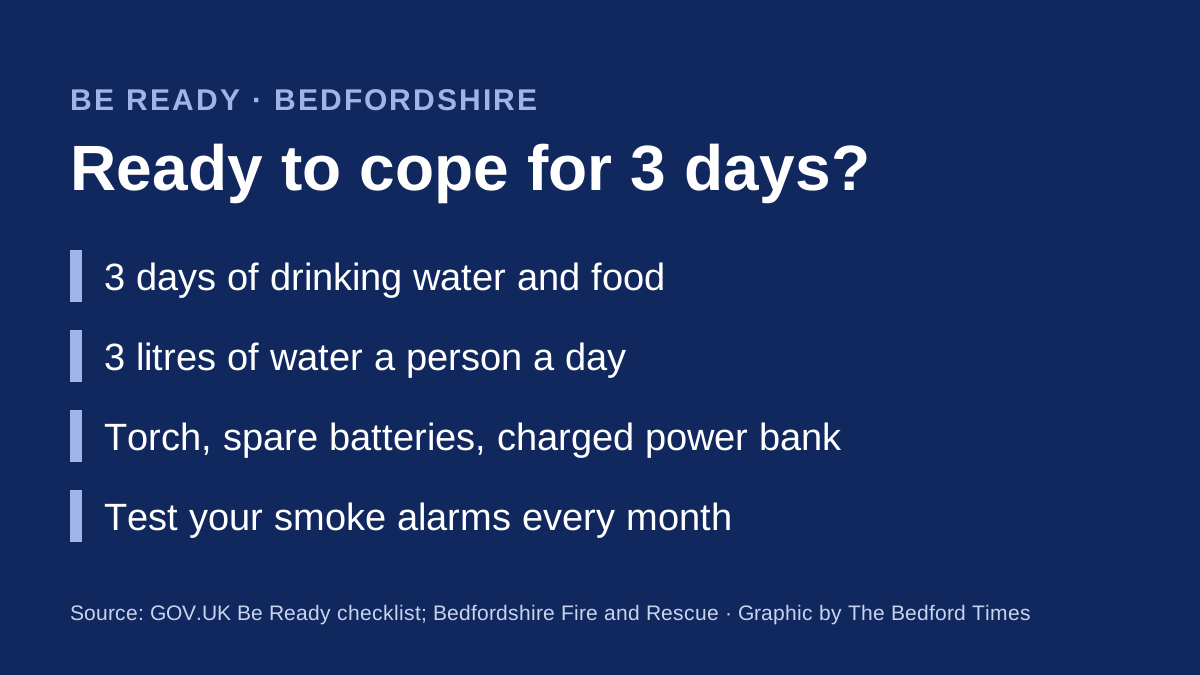

Bedfordshire's fire chief backs the Be Ready campaign: 3 litres of water a person a day, food, a torch and power bank for 3 days, and monthly smoke alarm tests.
Households across Bedford and the rest of the county are being asked to get ready to look after themselves for up to three days if a storm, flood or power cut knocks out everyday services.
The Government’s new Be Ready campaign is being backed locally by the Bedfordshire Resilience Forum. Bedfordshire Fire and Rescue Service is using it to add one thing to every household’s list: working smoke alarms.
The service says the campaign is meant to make homes more resilient to disruption from severe weather, power outages, flooding and other emergencies.
“It’s also about reducing risks”
Chief Fire Officer Andy Hopkinson, who chairs the Bedfordshire Resilience Forum, said:
“Preparing for emergencies isn’t just about having supplies at home. It’s also about reducing risks wherever we can. Taking a few minutes to check your smoke alarms and review fire safety advice is one of the simplest and most effective things you can do to protect yourself and your family.”
The fire service’s own advice is to check smoke alarms monthly, plan an escape route from your home, and cut down common fire risks. It publishes free home fire safety advice online, and says extra support is available for residents who may be more vulnerable to fire.
What the campaign asks you to keep
According to the fire service, the campaign recommends that households:
- keep three days’ worth of drinking water and non-perishable food
- store a torch and spare batteries
- keep a charged power bank to hand
- make sure they can reach important information and emergency contacts
- check whether they qualify for the Priority Services Register
- think about the needs of children, pets and anyone who takes regular medication
The campaign’s printable checklist goes into more detail. It suggests 3 litres of bottled drinking water per person per day, with more needed for cooking and washing, and food with a long shelf life that needs no fridge or cooking, such as tinned meat, fish or vegetables, dried fruit and nuts. “It’s best to buy food you’d usually eat,” it says.
The list also covers:
- Light and warmth: a torch, blankets, sleeping bags and warm clothing
- Information: a battery or wind-up FM radio and a charged power bank
- Money and documents: cash in coins and notes, cards, copies of ID, and a note of important phone numbers and any regular medication and doses
- Health: a first aid kit and essential medication
- Babies: ready-made formula, “as you may not be able to boil water to make up powdered formula safely”, plus nappies and wipes
- Pets: pet food and bottled water
No need to buy it all at once
The checklist says the job is “easier than you might think” and that most people will already have some of it. Its advice is to check the cupboards first, write down what is missing, and pick up an item or two on normal shopping trips to spread the cost.
It also suggests setting a reminder every six months to check expiry dates, and talking to neighbours about what you could share during an outage. Anyone with spare items could think about donating them to people who cannot afford to prepare, it says.
The campaign site explains how to check whether you can sign up to the Priority Services Register for support during outages.
The campaign’s own site will not carry live information during an emergency. In immediate danger, call 999.
Have your say